

Transform Your Movement by Strengthening the Muscles Behind Your Shoul…
페이지 정보

본문
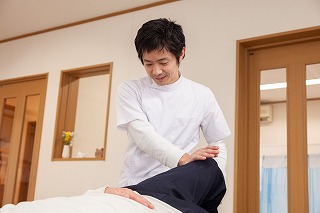
Many people focus on stretching major muscle groups when seeking greater flexibility, yet often overlook the small but critical muscles around the shoulder blades. These muscles, including the serratus anterior and 米子 肩こり rhomboids, act as the foundation for shoulder movement .
Without proper scapular control, even simple motions like reaching overhead can become restricted or painful. Anyone sitting for extended periods is at risk , where rounded shoulders and tight chest muscles become habitual. Real mobility begins with recognizing how the shoulder blade moves .
The scapula isn’t a static bone but a dynamic platform that shifts with every arm movement. If the scapula doesn’t move properly, the shoulder must make up for it , forcing the neck or spine to take on extra strain. Lifting your arms overhead without scapular control triggers compensatory movements in the neck, spine, and ribcage .
This misalignment not only limits flexibility but also increases injury risk over time. Proper scapular function allows the shoulder to move freely without strain , allowing the shoulder to move freely without strain.
Simple exercises like scapular push-ups or wall slides can rebuild strength and coordination in these often-neglected muscles. A proper scapular push-up involves no elbow flexion—only controlled blade motion .
This drill trains scapular glide by forcing alignment against a vertical plane .
Repetition rewires neuromuscular patterns for better scapular control .
Consistency matters more than intensity—just a few minutes daily builds awareness and control .
Beyond flexibility, this work enhances posture and reduces upper back pain. Anyone who sits, drives, or lifts repeatedly benefits from balanced shoulder blades , which counteract the effects of prolonged sitting or repetitive motions. A balanced scapular position opens the chest, relaxes the neck, and distributes movement more evenly across the upper body .
You’re not stretching tight muscles—you’re restoring the mechanics that made them tight .
Even minor attention to the shoulder blades unlocks major gains in mobility .
These muscles hold the secret to moving without pain or restriction .
Slow, intentional practice builds the foundation for lifelong, pain-free movement
- 이전글Как выбрать проектор для дома? 26.04.23
- 다음글프릴리지 사용 경험과 관계 만족도 변화 26.04.23
댓글목록
등록된 댓글이 없습니다.